
Is your website a liability or an asset?
A guide to help non-technical readers understand technical risk

I started Midday to give practical support to people whose digital roles have grown and become harder to manage.
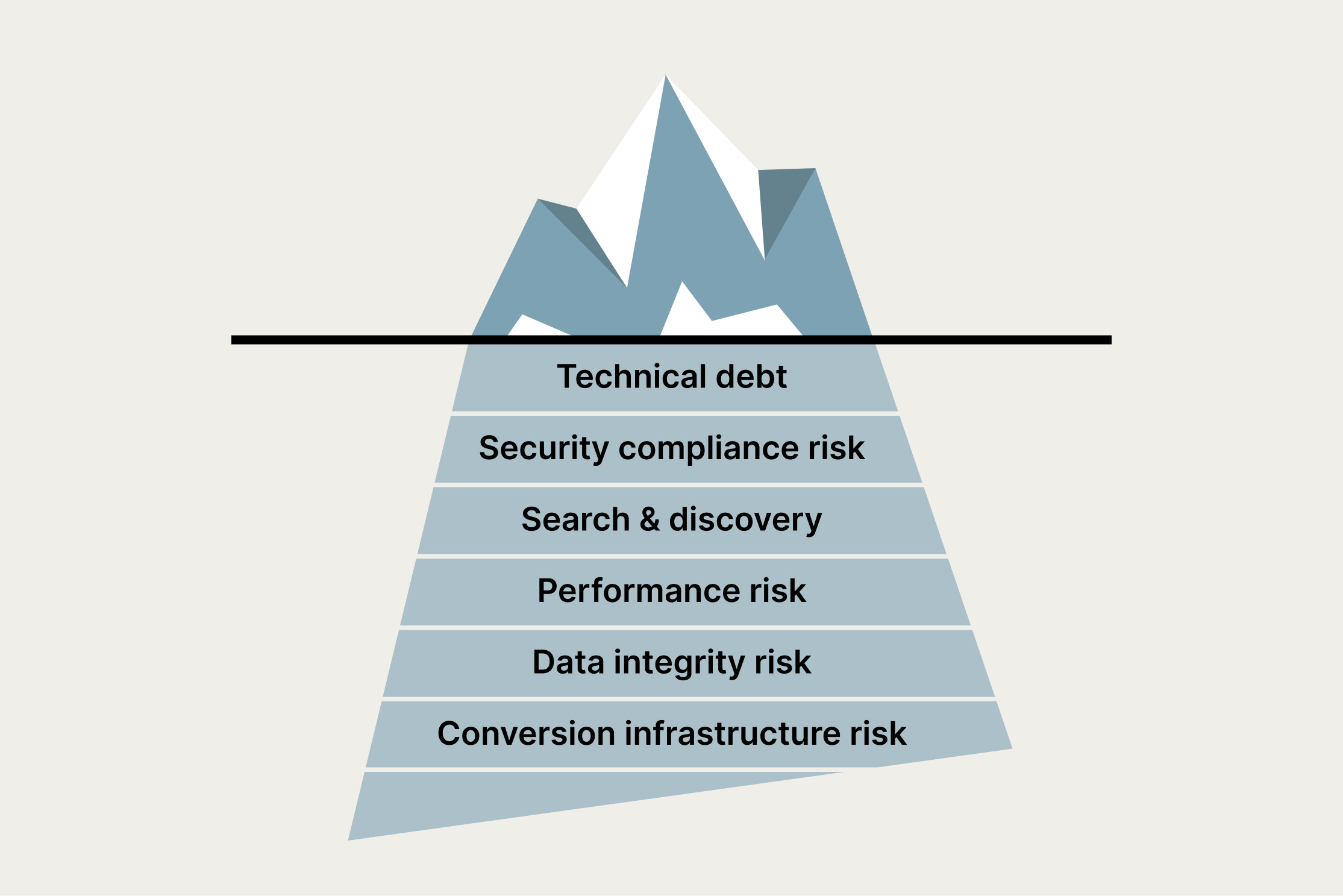
If you’re a non-technical leader, having a website that simply works isn’t enough. Consider this: Is there technical risk with your site, and could it affect your revenue?
Your developer or agency might assure you there’s no technical risk and all systems are solid. But in my experience, technical risk is an ongoing threat. Not just at launch, but over time. Left unaddressed, it can hurt revenue, limit platform growth and damage brand trust. In short, it’s not just a developer’s problem. It’s your problem too, as technical risk directly affects your business.
If your website drives revenue, it carries risk.
Let’s begin with technical debt. This happens when a developer takes shortcuts to meet a deadline and doesn’t implement the code as well as they should. You might think this never happens, but it does. Especially on projects with fixed costs, fixed scope, and tight deadlines. These projects are often too ambitious for the budget and time allowed.
Search and discovery risk is a big one, and you might not notice it until your website traffic drops by 30%. The cause could be broken internal links, core web vitals issues or a misconfigured robots.txt file. I have seen these issues result in fewer leads, lower-quality traffic or less visibility in search results.
Performance risk is like a hidden tax on your conversion rate. I have seen it lead to higher bounce rates, fewer conversions, wasted ad spend and low-quality scores. The causes usually start with slow page loads, scripts that block rendering or too many third-party tags.
Data integrity risk occurs when your measurement tools stop providing accurate information. I’ve seen issues like broken event tracking, duplicate analytics, inconsistent UTM tags, or cookie consent tools that fail. These problems can distort your data without you realising it.
This can waste your budget, create misleading performance reports, and lead to poor strategic decisions. If your data is wrong, every decision you make based on it is also at risk.
Conversion infrastructure risk can block a customer’s intent from turning into revenue. Problems like broken forms, CRM sync issues, webhook errors, or JavaScript-failing call-to-action buttons can all cause lost leads, often without any clear warning.
Security and compliance risks are often overlooked until a problem happens. Over the years, I’ve seen outdated plugins, exposed APIs, weak SSL settings, and incomplete data-handling processes. These issues can create serious vulnerabilities, cause legal trouble, damage your brand’s reputation, and most importantly, reduce customer confidence.
Technical risk doesn’t disappear. It accumulates.
As technical risk grows, resilient companies treat it as part of their revenue infrastructure. You should work with your development team to identify, monitor, and resolve issues to protect your growth and maintain trust.
If your website generates leads, supports sales, handles data, or carries your brand, take time this quarter to review its risk profile.
Ask yourself questions like:
When was our last technical audit?
Do we actively monitor form and integration failures?
Who owns platform risk commercially?
As your digital responsibility grows, so does the need to understand your platform. Once you do, you’ll have the confidence to lead better digital work.
If you want to understand where your website may be exposed, I can help you surface the right questions.
Good luck.
Adam
UK-based. In person, where possible.