
Protect your revenue and reputation
Why website maintenance and uptime shape digital outcomes.

I started Midday to give practical support to people whose digital roles have grown and become harder to manage.
If your website stopped working for two hours tomorrow, what would it actually cost?
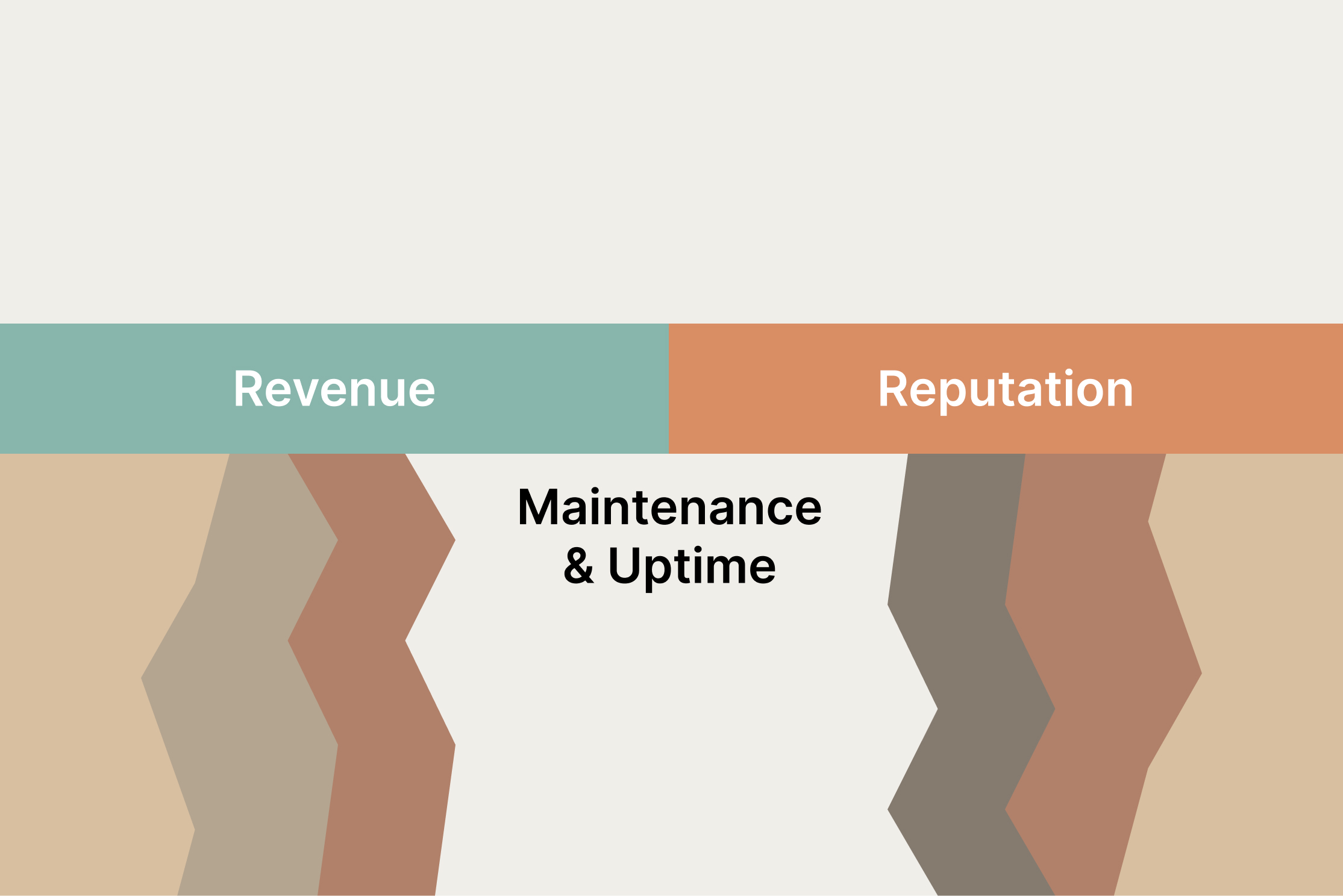
Most firms see maintenance as background work, such as updates, monitoring, and uptime percentages. However, once your website generates revenue, supports compliance, or represents your brand, maintenance becomes active risk management to protect income and trust.
As your company grows, its website becomes increasingly important, with more revenue and people depending on it.
Maintenance and uptime keep the website stable, directly impacting revenue and reputation. They turn routine work into safeguards for business growth and trust.
If your site handles leads, transactions, bookings, or supports your brand, uptime is critical to income and reputation. Success is often unnoticed; failures have an immediate impact. For instance, a two-hour e-commerce outage during a peak sale can mean lost sales and frustrated customers taking to social media. Even a brief lapse can drive potential business away and hurt trust, making downtime’s true cost higher than the time lost.
Reputation is harder to measure, but it’s just as real. A slow site during a campaign, a security warning, or a broken form might seem minor, but these issues add up in customers’ and stakeholders’ minds. Being reliable shows you’re competent, while inconsistency signals risk.
Firms invest in maintenance and uptime because downtime and visible problems usually cost more than preventing them.
Reliable maintenance doesn’t just protect revenue. It protects your ability to lead digital work with confidence.
With reliable maintenance and uptime, you face fewer urgent interruptions and can plan confidently. This translates to higher conversion rates, better site performance, and improved customer satisfaction, making it easier to achieve targets and demonstrate your value to stakeholders.
When uptime is steady and maintenance is organised, your work changes. You can move fast without breaking things. You can talk about performance confidently and focus on growth instead of just managing technical issues. This stability releases innovation: teams can experiment with new features, run bold campaigns, and embrace opportunities that previously seemed risky.
Most firms know the financial cost of downtime. It’s easy to calculate at a basic level: revenue per hour times the hours lost. The logic is simple: spending a little to prevent problems can save you much more when the unexpected happens.
By treating maintenance and uptime as business must-haves, you protect revenue by preventing costly downtime and safeguard your reputation by ensuring consistent service—the foundations of a strong company.
Assess whether your current maintenance aligns with your website’s risk and business needs. Review recent incidents and map out which parts of your business rely most on the website. Imagine the impact of failure and identify gaps—then take action to ensure your support matches your website’s importance to your firm.
If you want better website support, I can point you in the right direction.
I’m here to help.
Adam
UK-based. In person, where possible.