
Why you’ve become the “default” digital decision-maker
Accountable by default, but not by design.

I founded Midday to offer practical, grounded support for people whose digital responsibilities have grown and become harder to manage.
Last week, we wrote about ‘digital jobs you’re doing that were never in your job description’. This week, I want to explore you as a default decision-maker.
You may be asked:
“Are we exposed here from a privacy perspective?”
“What breaks if we turn this tool off?”
“Why do our analytics tell a different story than the finance report?”
Digital work covers marketing, operations, and IT, which often leads to gaps in who owns what.
When no one is clearly in charge, you end up making the decisions that perhaps you shouldn’t.
You may not have the title “Head of Digital,” but people still expect you to:
Provide feedback when data sources conflict.
Defend why a campaign or platform underperformed.
Choose between three imperfect options under time pressure.
If this sounds familiar, you are accountable in practice, but not by agreement.
When decision-making is informal rather than intentional, three things happen:
You spend your day putting out fires instead of setting the direction.
If a project fails, the blame often falls on whoever gave the go-ahead, even if they didn’t have the power or resources to manage it.
The careful thought that goes into making decisions often isn’t recognised.
As a result, you end up feeling responsible but not truly empowered.
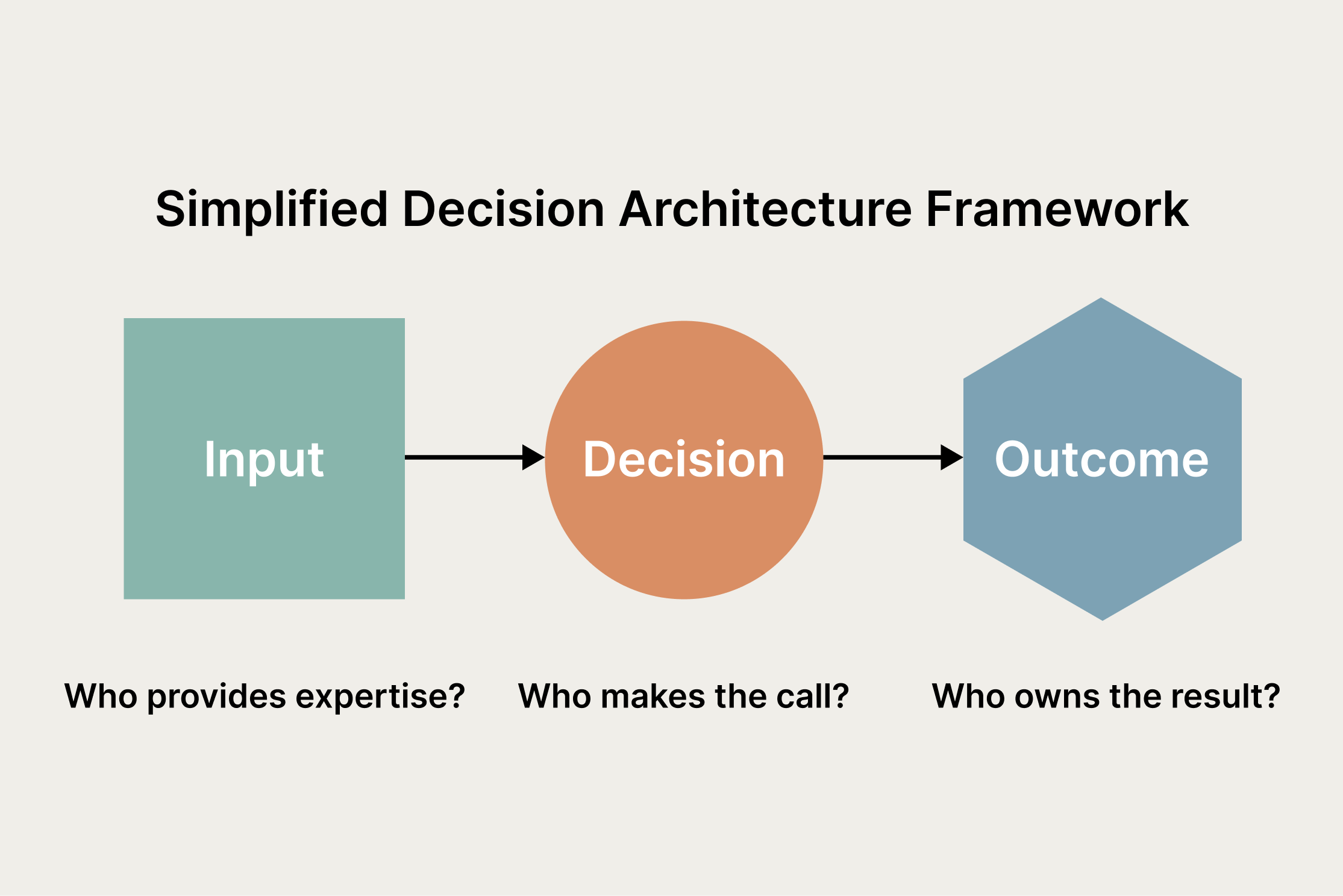
If you feel overwhelmed, your Decision Architecture is broken.
Authorities like Bain & Company argue that organisational performance is simply the sum of its decisions. When Architecture is poorly designed, accountability drifts toward whoever is most willing to catch the ball.
To improve your digital work, use clear language. Begin by separating these three roles:
The Input: The person or team who provides the information and expertise needed for the decision.
The Decision: The person who is authorised to make the final decision.
The Outcome: The person or group responsible for implementing and being held accountable for the result.
I often see people become the digital decision-maker simply because everyone assumes one person does it all, and that person is them. But that’s not how it should work.
Next time a digital decision comes your way, take a moment. Ask yourself if you’re providing input, making the decision, or responsible for the outcome. Define your role before you respond. This helps you stay in control and protect your time.
Copy and paste this response before you give your advice:
“I’m happy to provide the Input on this from a digital perspective. To make sure we have the right Decision Architecture, who is making the final call on this, and who is owning the Outcome if we move forward?”
Action / Decision
Example: Signing off on the Q3 Digital Ad Budget
The Input (I) - Digital Lead (Data/Metrics)
The Decision (D) - Marketing Director
The Outcome (P) - Ad Ops Team (Execution)
View the "Who Decides?" Mapping Sheet
Subscribe if you want thoughtful, practical guidance for managing digital work without unnecessary pressure, noise, or sales agendas.